


Southeastern Michigan Inland Lake Boating Laws
There are some basic rules and regulations when you go boating on inland lakes. First let's start with life jackets. When you are on an inland lake you must have a life jacket for every person on the boat. For young kids under 6 on the boat you must have a special Type I or II lifejacket. For very young children you must have a life jacket that has a head support as part of the life jacket.
I. MICHIGAN LIFE JACKET LAWS:
- All vessels must be equipped with a PFD for each person on board or being towed.

- Michigan law requires all children under 6 years of age to wear a USCG–approved Type I or II PFD when riding on the open deck of any vessel while underway.
- The USCG requires that all vessels have at least one Type I, II, or III PFD that is USCG–approved, wearable, and of the proper size for each person on board or being towed. Sizing for PFDs is based on body weight and chest size.
- Michigan’s PFD law permits a vessel that is less than 16 feet long, or is a canoe or kayak, to choose to have either a wearable PFD (Type I, II, or III) or a throwable PFD (Type IV) for each person on board.
- In addition to the above requirements, one USCG–approved throwable device must be on board vessels 16 feet or longer and be readily accessible.
- Each person riding on a PWC or being towed behind a PWC or other vessel must wear a USCG–approved Type I, II, or III personal flotation device. Inflatable PFDs are not allowed on PWC or while being towed behind PWC or other vessels.
- All PFDs must be in good and serviceable condition and must be readily accessible.
TYPES OF LIFE JACKETS:
TYPE I
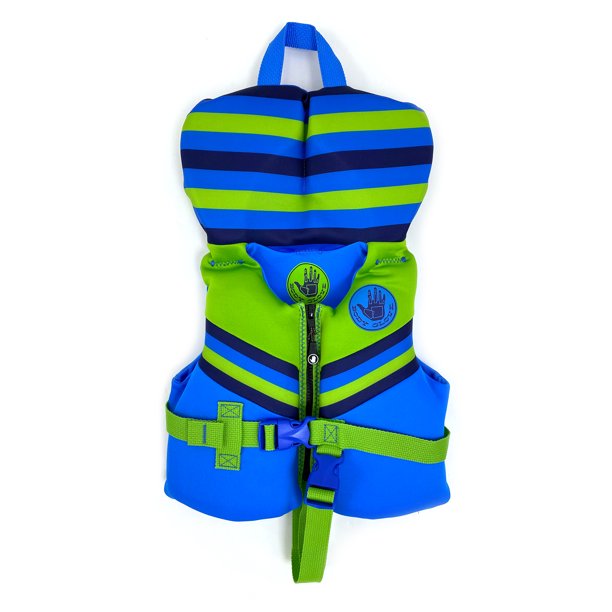
(Off-Shore Life Jacket) (22 lbs. Buoyancy) Best for open, rough or remote water where rescue may be slow in coming. Advantages: Turns most unconscious wearers face-up in water. Highly visible color. Floats the person the best. Disadvantages: Bulky. Sizes: Two sizes to fit most children and adults.
TYPE II
(Near-Shore Buoyant Vest) (15.5 lbs. Buoyancy) Good for calm, inland water or where there is good chance of fast rescue. Advantages: Turns some unconscious wearers face-up in water. Less bulky, more comfortable than Type I PFD. Inexpensive. Disadvantages: Not for long hours in the water. Will not turn some unconscious wearers face-up in water. Sizes: Infant, Child Small, Child Medium, Adult.
TYPE III
(Flotation Aid) (15.5 lbs. Buoyancy) Good for calm, inland water or where there is a good chance of fast rescue. Advantages: Generally the most comfortable type for continuous wear. Freedom of movement for most active water sports. Available in many styles. Freedom of movement for water-skiing, small boat, sailing, fishing, etc. Disadvantages: Wearer may have to tilt head back to avoid going facedown. In rough water, a wearer's face may often be covered by waves. Not for extended survival in rough water.
TYPE IV
(Throwable Device) For calm, inland water with heavy boat traffic, where help is always nearby. Advantages: Can be thrown to someone. Good back-up wearable PFDs. Some can be used as a seat cushion. Kinds: Cushions, Rings and Horseshoe buoys. Disadvantages: Not for unconscious persons. Nor for non-swimmers or children. Not for many hours in rough water.
Do you want the newest lake homes emailed to you before others get them? Get the best homes here

II. SPEED LIMITS
1. Slow – no wake speed within 100 feet of the shoreline, moored and anchored watercraft, pier, person, raft, swimming area, and swimmers.
2. Maximum speed 55 m.p.h. in all water unless otherwise regulated.
3. Michigan law states that a person operating a vessel shall operate it in a careful and prudent manner and at such a rate of speed so as not to unreasonably endanger the life or property of any person. A person shall not operate a vessel at a rate of speed greater than will permit him, in the exercise of reasonable care, to bring the vessel to stop within an assured clear distance ahead.
4. A person shall not operate a vessel in a manner so as to unreasonably interfere with other persons lawfully using Michigan’s water resources.
SLOW – NO WAKE ! Means operating at a very slow to speed in order to minimize the wake created by your vessel.
III. TOWING OF PERSONS
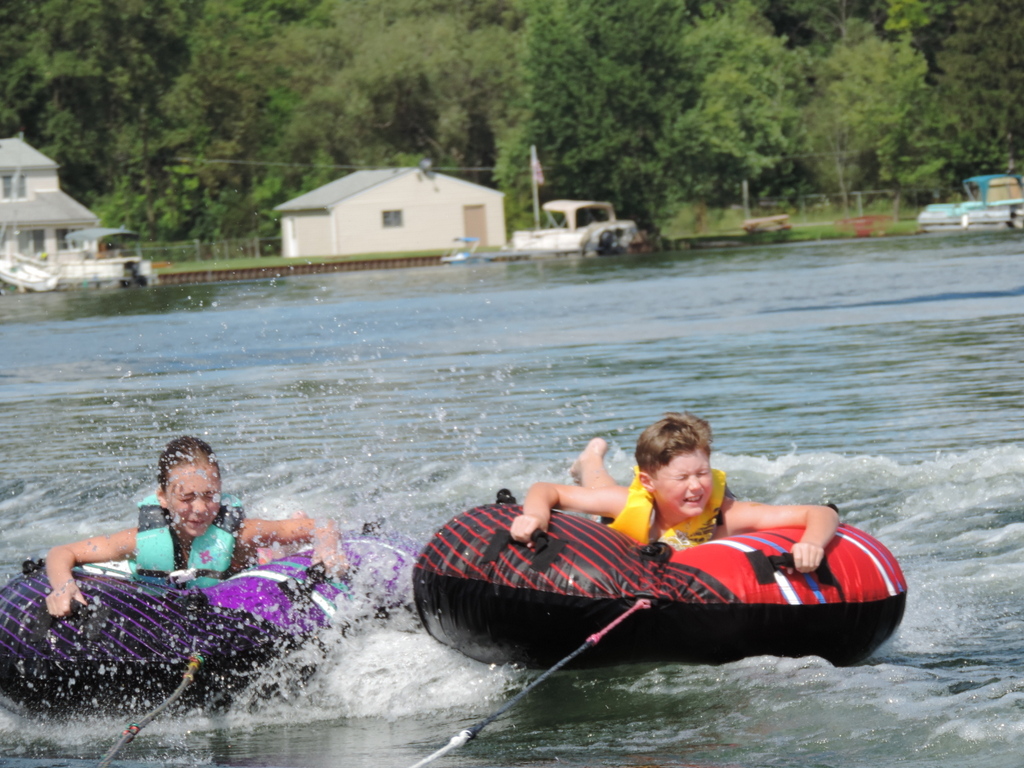
1. No water skiing between one hour after sunset and one hour prior to sunrise. For a PWC (personal watercraft), no towing between sunset and 8:00am.
2. At least one competent person, in addition to the driver, shall be in any boat towing persons on water skis, tubes, etc. This additional person shall be in a position to observe the progress of the person being towed.
3. The tow boat must be equipped with a 170 degree wide angle rear view mirror affixed to permit the driver to observe the progress of the person being towed.
IV. DISTANCE BETWEEN PERSONS BEING TOWED AND OTHER OBJECTS
Vessels and persons being towed on water skis, water sleds, etc. shall maintain a distance of 100 foot from any dock, raft, buoyed or occupied bathing areas, or vessels moored or at anchor, except when the vessel is proceeding at a slow-no wake speed or when water skiers are being picked-up or dropped off.
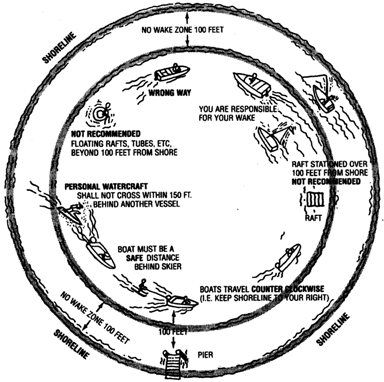 V. COUNTER-CLOCKWISE OPERATIONS
Persons operating vessels shall operate in a counter-clockwise fashion when it reasonably possible.
VI. NOISE LEVEL OF BOATS
Motorboats are required to have mufflers or an underwater exhaust system such that it does not produce sound levels in excess of 90 dB when subjected to a stationary (neutral) sound level test of it’s engine at no closer than one meter (3.3 feet).
VII. CHILDREN OPERATING MOTORBOATS
1. Persons under 12 years old operating motorboats:
• Have been issued a boating safety certificate and have it on board the vessel,
• Must be under the direct supervision of a person
16 years of age or older; and,
• The boat must have no more than 35 HP.
2. Persons born on or after July 1, 1996 shall not operate a motorboat unless they have been issued a boating safety certificate.
3. Any person may operate a motorboat that is powered by a motor of no more than 6 HP.
4. A person of less than fourteen (14) years of age may not legally operate a PWC under any circumstances.
5. A person 14 or 15 years of age may operate a PWC if:
• Have been issued a boating safety certificate and have it on board the vessel,
• Are accompanied by or are operating the PWC no more than 100 feet from a parent, legal guardian, or another designated person of 21 or older.
6. A person who was born after December 31, 1978 shall not operate a PWC on Michigan waters unless they have obtained a boating safety certificate.
VIII. LIQUOR AND / OR CONTROLLED SUBSTANCES
1. A person who is intoxicated (as defined in the same way as for driving a car) may not operate or be in control of any vessel. The Michigan implied consent law applies for boat operator intoxication testing. Severe fines and/or jail time await those who are observed operating a water craft while intoxicated on alcohol or drugs (legal or illegal).
IX. OPERATION OF VESSELS
1. Sailboats have the right-of-way to motorboats while they are under sail power.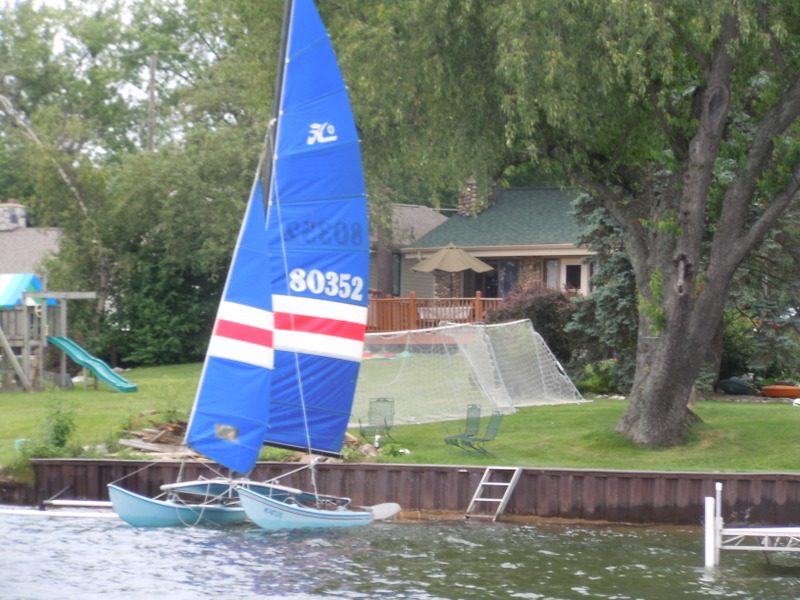
2. Motorboats shall give way to non-motorized vessels.
3. When two vessels are approaching each other head-on, or nearly so, the operator of each shall cause his vessel to pass on the port (left) side of the other (i.e. keep the approaching boat to your left).
4. When over taking a vessel proceeding in the same direction, the operator of the over taking vessel, unless it is not feasible to so do, shall pass on the port (left) side of the vessel ahead (i.e. keep the overtaken boat to your right).
5. When two vessels are approaching each other at right angles or obliquely so as to involve risk of collision, the operator of the vessel which has the other on his own port (left) side shall hold his course and speed, and the operator of the vessel which has the other on his own starboard (right) side shall give way to the other by directing his course to starboard so as to cross the stern of the other vessel or, if necessary to do so, shall slacken his speed, stop or reverse.
All vessels are required to provide at least one United States Coast Guard approved PERSONAL FLOTATION DEVICE per passenger. Each child under the age of 6 years, and in an open deck area is REQUIRED by law to wear a TYPE I or TYPE II PFD AT ALL TIMES!
X. RESPONSIBILITY FOR VESSEL WAKE
The owner of any vessel is personally responsible for any damage to life or property resulting from a wake or swell created by the negligent operation of the vessel, where the vessel is being operated with his consent.
Always maintain safe speeds and follow no-wake laws.
XI. DISTANCE FROM SCUBA DIVER’S FLAG
A vessel shall not be operated within 200 feet of a buoyed diver’s flag unless it is involved in tendering
the diving operation. A person diving shall stay within a surface area of 100 feet of a diver’s flag.
XII. PERSONAL WATERCRAFT REGULATIONS
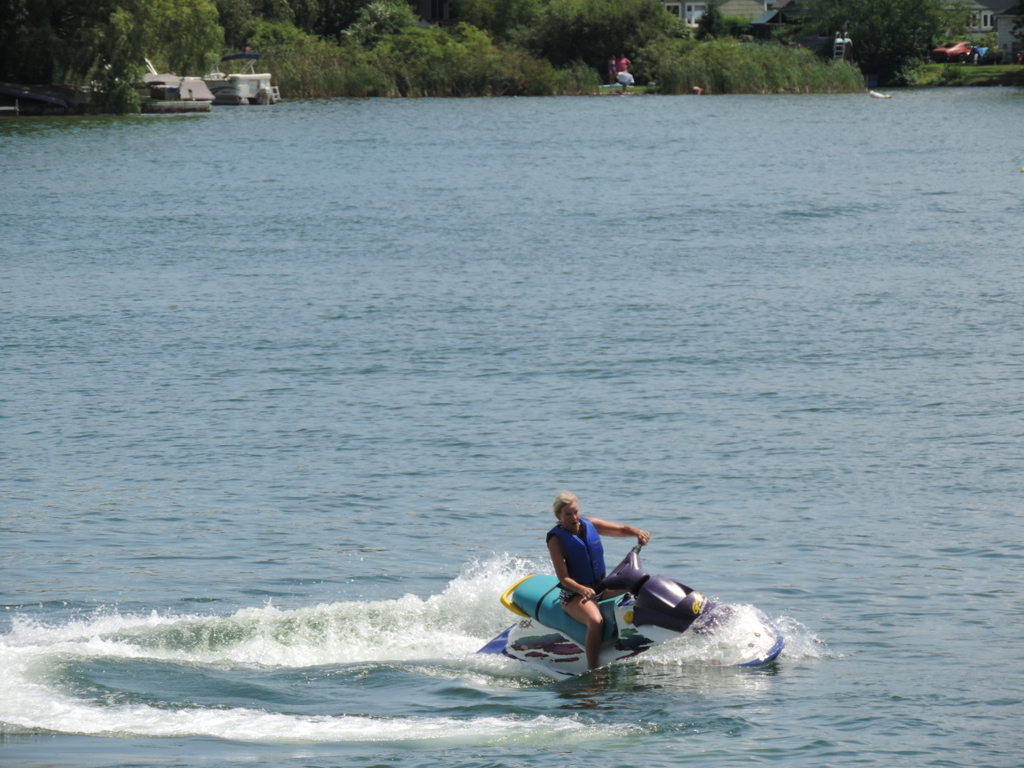
1. A person shall maintain a distance of 100 ft. from any dock, boat, raft, buoyed or occupied bathing area while driving at other than slow – no wake speed.
2. A person shall not cross within 150 ft. behind another vessel other than a personal watercraft, that is moving at greater than a slow – no wake speed.
3. A person shall not operate a PWC on the waters of this state from sunset to 8:00 A.M local time.
4. Maneuvers that endanger life, limb, or property, including weaving through congested traffic, jumping
the wake of another vessel or turning unnecessarily close to another other vessel and/or swerving at the last moment to avoid a collision constitutes reckless operation of a vessel.
5. Carrying more persons than the vessel is designed to carry is prima facie evidence of reckless operation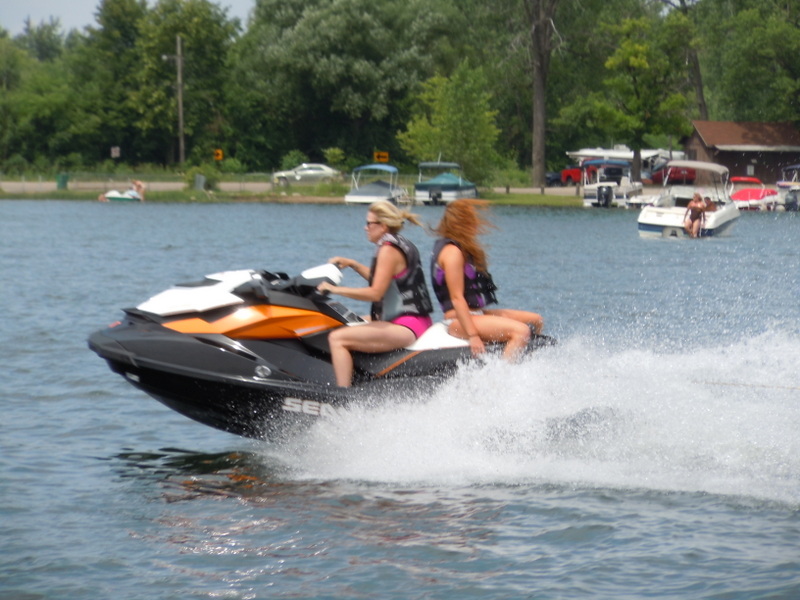
of a vessel.
6. Lanyards must be attached to the operator on vessels that are equipped with lanyards.
7. A person of less than fourteen (14) years of age may not legally operate a PWC under any circumstances.
8. A person who was born after December 31, 1978 shall not operate a PWC on Michigan waters unless they have obtained a boating safety certificate.
9. A personal watercraft shall not be operated at speeds in excess of (55 mph) except where otherwise posted.
10. A person shall not operate a PWC in waters less than two feet deep unless traveling at a slow no-wake speed.
Call Joe or Janel at (248)320-6840 if you are looking for a lake home.
Joe was everything I could have hoped for in my real estate agent. He was very flexible, easy going, knowledgable, patient, and helpful. The man deserves 10 out of 5 stars in my book. We are very happy with the home he helped us find and if you find yourself looking at this review trying to decide if Joe is your man, hear me when I say, Joe is THE man. Thanks again for everything Joe!
Janel came highly recommended by several of my coworkers. I contacted her early in my home selling/planning stage. She was very patient and understanding of my circumstances. When it came time to list the home she did a thorough walk thru and I could tell she was very knowledgeable about home construction. Janel took the time to explain the process and was honest with me about my home and it’s potential to sell. She was great dealing with all parties concerned with the sale of the home (ex-husband, multiple lawyers) and was professional with everyone. I really appreciate her support throughout the entire experience and my house sold fast! Thank you Janel! I will definitely recommend you and look forward to working with you in the future!



Privacy Policy / DMCA Notice / ADA Accessibility


